
Spider Fighting: Hero Game
Zego StudioAction
4.51.27K Reviews
- Version
- 3.9.2
- Installs
- 100.00M
- Age Rating
- Teen
Screenshots
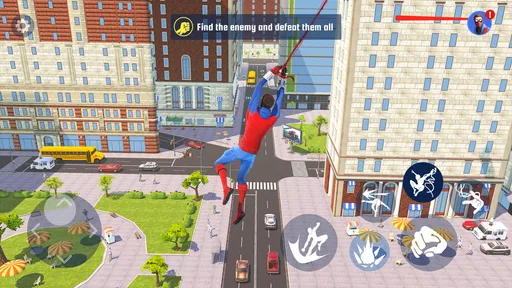
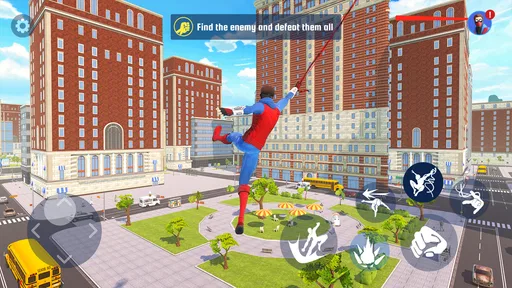
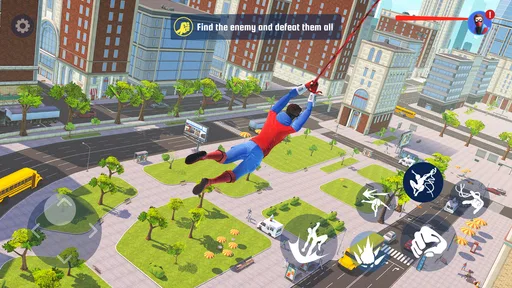
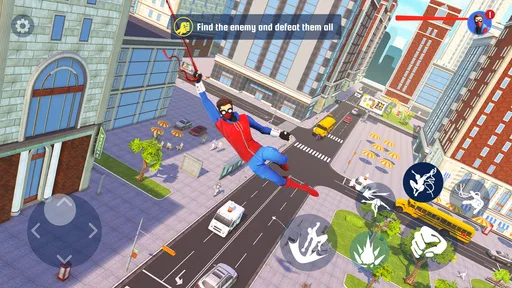
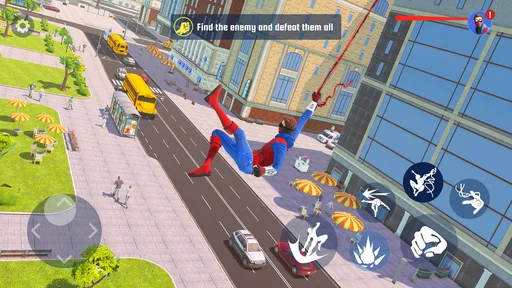
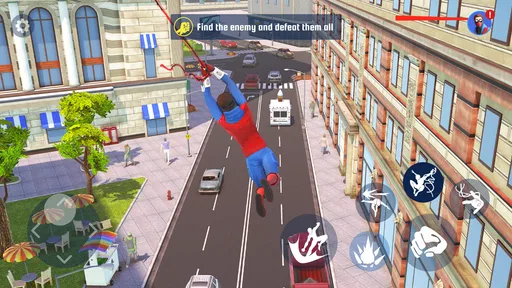
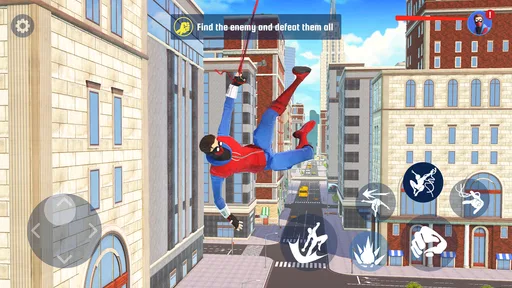
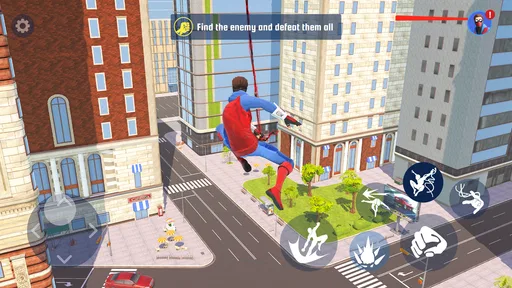
Our Review of Spider Fighting: Hero Game
 Analysis by Appyee
Spider Fighting: Hero Game caught my attention because it takes a familiar superhero fantasy and puts it into a direct action format: step into a dangerous city, fight through trouble, and try to feel like the hero rather than simply watch one. After spending time with it, I see a game that is easy to understand within minutes, but harder to judge fairly until the first burst of excitement wears off. Its strongest quality is immediate accessibility. Its biggest question is whether the basic fighting loop gives you enough reason to return when the novelty of swinging into a crime-filled setting has faded.
This is a free action game from Zego Studio, aimed at Teen players. It has reached over 100 million installs and holds a 4.5 average from around 167 thousand ratings, which makes it clear that the concept has found a large audience. The download itself costs nothing, although optional purchases range from $0.99 to $94.99 per item. I would approach it as a quick, casual superhero game rather than as a deep character-driven adventure or a replacement for a full console-style action title.
What the first week feels like
The first sessions are carried by the fantasy of being a spider-themed hero. That premise does most of the introductory work for the game: you are not learning a complicated role or trying to understand a large collection of unfamiliar systems before the action starts. The appeal is visual and immediate. You want to move through the vice town, confront enemies, and see whether your character can handle the next challenge.
That simplicity is useful on a phone. I can imagine opening the game during a short break, playing a few encounters, and closing it without needing to remember a complicated story or a long list of objectives. The action category suits this approach. It is built around the satisfaction of doing something right away, not around waiting for a long opening sequence to explain the world.
During the first week, the game benefits from a natural rhythm. A new player is curious about the next fight, the next area, and the next improvement to the hero. Even when an individual battle is straightforward, the superhero setting gives ordinary combat a little more personality than an anonymous arena would. The town acts as a backdrop for the fantasy, while the fighting provides the reason to keep moving.
My advice for the opening sessions is to avoid treating every available improvement as essential. Try the basic combat flow first and notice what actually makes fights easier or more enjoyable for you. Some players will care about speed and aggressive attacks, while others will prefer a safer approach that gives them time to read enemy movements. Learning that preference early is more useful than spending immediately just because an upgrade appears attractive.
The right kind of casual superhero game
I would recommend it first to people who want uncomplicated action with a recognizable hero theme. It is a good fit for a player who enjoys short bursts of fighting and does not need a large amount of dialogue, exploration detail, or tactical preparation. It also suits someone who likes the idea of a comic-book-inspired character but does not want to commit to a lengthy role-playing game.
It is less suitable for anyone looking for a carefully written superhero story, complex team building, or highly technical combat. The store summary presents the fantasy of becoming a spider hero and taking on a corrupt city, but that promise should be understood as an action premise rather than a guarantee of a large cinematic campaign. If your favorite part of superhero games is character development and dramatic storytelling, a narrative-focused alternative will probably offer more lasting satisfaction.
One useful first-week habit is to play with a clear stopping point. Rather than repeating fights until they become tiring, I prefer to finish after a small goal, such as learning a new attack pattern or clearing a particular stage. This keeps the game feeling like a compact activity instead of turning the early novelty into an exhausting grind. It also makes it easier to tell whether I genuinely want another session or am simply continuing because the next reward is visible.
How it compares with familiar alternatives
Compared with endless runners, Spider Fighting: Hero Game asks more from the player than simply reacting to obstacles. The appeal comes from confronting opponents and feeling responsible for the outcome of a fight. Compared with large open-world superhero games, however, it is much more focused and lightweight. You should not approach it expecting the freedom, world detail, or mission variety associated with a premium console experience.
It also occupies a different space from competitive fighting games. There is no reason to choose it if your main goal is precise player-versus-player competition, tournament depth, or a highly balanced roster. Its strength is the single-player superhero fantasy and the convenience of picking up an action game on a mobile device. That distinction matters because many disappointments come from expecting one genre to provide the pleasures of another.
The game is free to start, which lowers the risk of trying it. At the same time, the presence of optional purchases means I would decide in advance whether I am comfortable playing without spending or whether I want to set a firm budget. The most important practical tip here is simple: do not let a temporary difficulty spike decide how much you pay. First check whether changing your approach or practicing the encounter solves the problem.
What remains after the novelty fades
I find it helpful to judge this game by what I choose to do when there is no new surprise waiting: whether I still want to refine a fight, or would rather switch to something with a different rhythm. That distinction also makes the spending question easier to handle, because I can separate genuine enjoyment from the urge to speed past a frustrating stretch. Next, I’d look at how fair that choice feels in practice.
Month-to-month value depends on the combat loop
After the first month, the central question changes. The spider-hero fantasy is no longer new, so the game has to earn another session through the feel of its fights and the satisfaction of making progress. In my experience, that means the title works best for players who enjoy repetition with small variations. If you like returning to an action game to sharpen your timing, improve your route through a stage, or test a stronger version of the same hero, it can remain a handy choice.
For everyone else, the long-term value is less certain. A simple combat loop can be enjoyable for weeks when the player actively likes its rhythm, but it can also become predictable once the first discoveries are gone. The difference is not necessarily about how much content exists; it is about whether the act of fighting remains interesting without the emotional push of seeing something for the first time.
I would use it as one game in a rotation rather than as my only mobile action title. A few sessions between other games can preserve its best quality: quick superhero escapism. Playing it continuously for a long stretch may expose its repeated patterns sooner. This is a practical way to extend its useful life without pretending that every game needs to become a daily habit.
The current version is 3.9.2, and the game supports devices running Android 7.0 or later. That broad compatibility is helpful for players using older phones, although the experience can still depend on the individual device and how comfortably it handles action controls. I would make sure the controls feel responsive on your phone before deciding whether the game deserves regular space. In a fighting game, a small amount of input frustration becomes much more noticeable over repeated sessions.
Maintenance is mostly about your attention
The main maintenance burden is not learning a complicated schedule; it is managing your own tolerance for repetition and optional spending. A game like this can be easy to revisit because the premise needs little explanation, but that convenience can also make it tempting to play automatically. If every session becomes a routine of clearing similar fights only to reach the next reward, the game may begin to feel like a task rather than entertainment.
I find it useful to separate three reasons for opening it: I want a quick action break, I want to practice, or I want to progress. Those are different motivations. The first can be satisfied in a short sitting. The second requires patience and attention. The third can become frustrating if progress slows and purchases start to look like the easiest solution. Recognizing which motivation I have makes the game easier to enjoy on its own terms.
Another good routine is to review your spending intention before buying anything. Because the game is free and contains items priced from $0.99 to $94.99, the range is wide enough that casual purchases can become a meaningful cost if they are made impulsively. I would treat paid items as optional conveniences, not as part of the basic admission price. If you are giving the game to a younger player, the Teen content rating and purchase controls deserve particular attention from the household account owner.
The age rating also helps define the audience. I would not present this as a game for very young children simply because the controls are approachable. Teen players and adults who enjoy stylized superhero action are the more natural audience. The rating should be considered alongside the fighting theme, not ignored because the game is available on a phone.
Where fatigue starts to appear
The first source of fatigue is repetition without a personal goal. Fighting can remain satisfying when I am trying to improve, but it loses energy when I am only moving through familiar encounters out of habit. The second is difficulty that feels like a demand to repeat rather than an invitation to learn. A challenging fight is welcome when better timing or positioning makes the difference; it is less enjoyable when progress seems tied mainly to waiting or paying.
The third source is the gap between the promise of a superhero city and the depth a player may actually want from that setting. The idea of conquering a vice town sounds larger than a sequence of action encounters. Players who expect a living city with varied activities, meaningful characters, and a strong sense of exploration may find the setting more decorative than substantial. That does not make the game unsuccessful, but it does limit its appeal for people seeking a full urban adventure.
I also think the name and theme create expectations that the game must constantly deliver spectacular movement. If the most enjoyable part for you is the fantasy of being a nimble spider hero, ordinary or repeated combat may eventually feel less impressive. This is why I would judge the game by its moment-to-moment controls rather than by the character concept alone. A strong theme can get me through the first week; responsive action has to carry the following weeks.
There is a useful way to test this before investing much time. Play a session when you are not chasing a new unlock or reacting to a first-time surprise. Ask whether the fight itself is still enjoyable. If the answer is yes, the game probably has a place in your rotation. If the answer is no, additional progression may only postpone the same conclusion. This small test is more revealing than looking at the install count or average rating, because it focuses on your own reason for returning.
Specific situations where it works well
Imagine having ten minutes before leaving for work or school. You want something active, but you do not want to begin a story-heavy game that will punish you for stopping early. This is where I can see Spider Fighting: Hero Game working well. The superhero premise gets me into the mood quickly, and the action focus makes a short session feel complete even if I do not play for long.
It can also work as a low-pressure introduction to mobile action games. Someone who finds complicated role-playing interfaces intimidating may understand the basic appeal here much faster. I would still encourage that player to learn the controls patiently rather than tapping randomly, because the difference between deliberate attacks and frantic input becomes important once encounters stop being effortless.
On the other hand, it is a poor choice for a long flight if you need one game to occupy you for many uninterrupted hours. Repetition may become obvious, and the free-to-play structure can make the experience feel less self-contained than a paid game designed around a complete campaign. For that use case, I would choose a premium action title with a clearly finished progression path, provided the device supports it.
It is also not my first recommendation for a player who dislikes in-app purchases on principle. Even if you never buy anything, their presence can affect how you interpret progression and difficulty. Some people can ignore that layer completely; others notice it every time they hit a slower section. Knowing which group you belong to is part of deciding whether the game will feel comfortable over time.
My long-term verdict
Spider Fighting: Hero Game earns a place on my phone as a convenient, free action game, but not as an automatic permanent favorite. Its first-week appeal is clear: the spider-hero idea is easy to understand, the setting gives the fights a recognizable identity, and the short-session format suits mobile play. Zego Studio has made something approachable enough for a broad audience, which helps explain why it has passed the 100 million install mark.
Its lasting value is more personal. If you enjoy repeating action encounters, improving through practice, and returning for brief superhero sessions, it can stay useful month after month. If you need constant mechanical variety, a substantial story, or a finished experience without purchase pressure, you will probably outgrow it. In that case, an open-world superhero game, a competitive fighter, or a premium action adventure would be a better match depending on what you value most.
My strongest recommendation is to keep expectations focused. Download it for quick hero-themed combat, not for a complete comic-book universe. Play without spending until you understand whether the fighting itself holds your attention. Set a personal limit on sessions and purchases, and notice whether you are returning because the action is fun or because the next reward is pulling you forward.
With that mindset, the game makes sense. It is free, widely played, and available to a broad range of Android devices, while its Teen rating signals the kind of audience it is meant for. The 4.5 average is encouraging, but my own conclusion is more measured: its real strength is convenient superhero action, while its long-term weakness is the risk of repetition. I would recommend it to casual action fans and superhero enthusiasts who enjoy a rotating collection of mobile games. I would skip it in favor of a deeper alternative if you want one title to become a lasting daily hobby.
Ultimately, Spider Fighting: Hero Game does not need to dominate your phone to be worthwhile. It succeeds when opened for a focused burst of fighting, a little escapism, or a quick change of pace. The novelty may bring you in, but only your response to the repeated combat will decide whether it stays.
Privacy and Permissions
See what permissions an app requests and how it handles your data.
- Wi-Fi connection information
- view Wi-Fi connections
- Other
- view network connections, full network access, control vibration, prevent device from sleeping, Google Play license check
Verdict
Strengths of Spider Fighting: Hero Game
- Simple controls make the fighting easy to learn.
- Short battles work well for quick gaming sessions.
- Spider-themed heroes give the game a distinctive style.
- Unlockable content adds motivation to keep playing.
- Offline play is useful when you have no internet access.
Limitations of Spider Fighting: Hero Game
- Combat can become repetitive after extended play.
- Some upgrades may require considerable grinding.
- Ads may interrupt gameplay between fights.
- The visual quality may vary across different devices.
- Limited multiplayer options reduce long-term competition.
Similar Picks in This Category
View All
Temple Run 2: Endless Escape
Imangi Studios4.1

PUBG MOBILE
Level Infinite4.3

Free Fire: 9th Anniversary
GARENA INTERNATIONAL I4.4

Talking Tom: Hero Dash Run
Outfit7 Limited4.3

slither.io
Lowtech Studios3.9

Sniper 3D:Gun Shooting Games
Wildlife Studios4.6
Frequently Asked Questions
What is Spider Fighting: Hero Game about?
Spider Fighting: Hero Game is an action-focused mobile title in which you control a spider-themed hero through combat missions and enemy encounters. The gameplay generally combines movement, attacks, dodges, and special abilities, with levels designed around defeating opponents and progressing through increasingly difficult challenges. It is aimed at players who enjoy simple superhero-style fighting games with short, accessible sessions.
How does the combat system work in Spider Fighting: Hero Game?
Combat is built around touch controls that let you move your character, attack nearby enemies, and use available abilities during battles. Success depends on timing attacks, avoiding incoming damage, and learning enemy patterns rather than repeatedly tapping without a strategy. As the stages become harder, choosing the right moment to attack and keeping your hero positioned safely becomes increasingly important.
Can Spider Fighting: Hero Game be played offline?
Many of the main single-player missions can typically be played without a continuous internet connection, which makes the game convenient for short sessions while traveling or when mobile data is unavailable. However, certain features may still require connectivity, including advertisements, updates, promotional content, or other online services. It is best to launch the game once while connected before relying on offline access.
Is Spider Fighting: Hero Game free to download and play?
The game is generally available as a free download, allowing players to install it and try its core gameplay without paying upfront. Free mobile games may include advertisements, optional purchases, or systems that encourage continued progression through upgrades and rewards. Before downloading, check the store listing for the current details about ads, in-app purchases, supported devices, and any age-related restrictions.
What should I know about performance and permissions before installing it?
Performance can vary depending on your phone or tablet, especially during busy fights with several enemies and visual effects on screen. A reasonably recent device with enough free storage should provide a smoother experience, while older hardware may show slower loading or reduced responsiveness. Review the permissions requested during installation and download only from the official Google Play or App Store listing.
Play our best games!


